Effectiveness of Gambas (Luffa acutangula) Solution in Reducing Bacterial Counts on Tablespoons: A Quasi-Experimental Study

Downloads
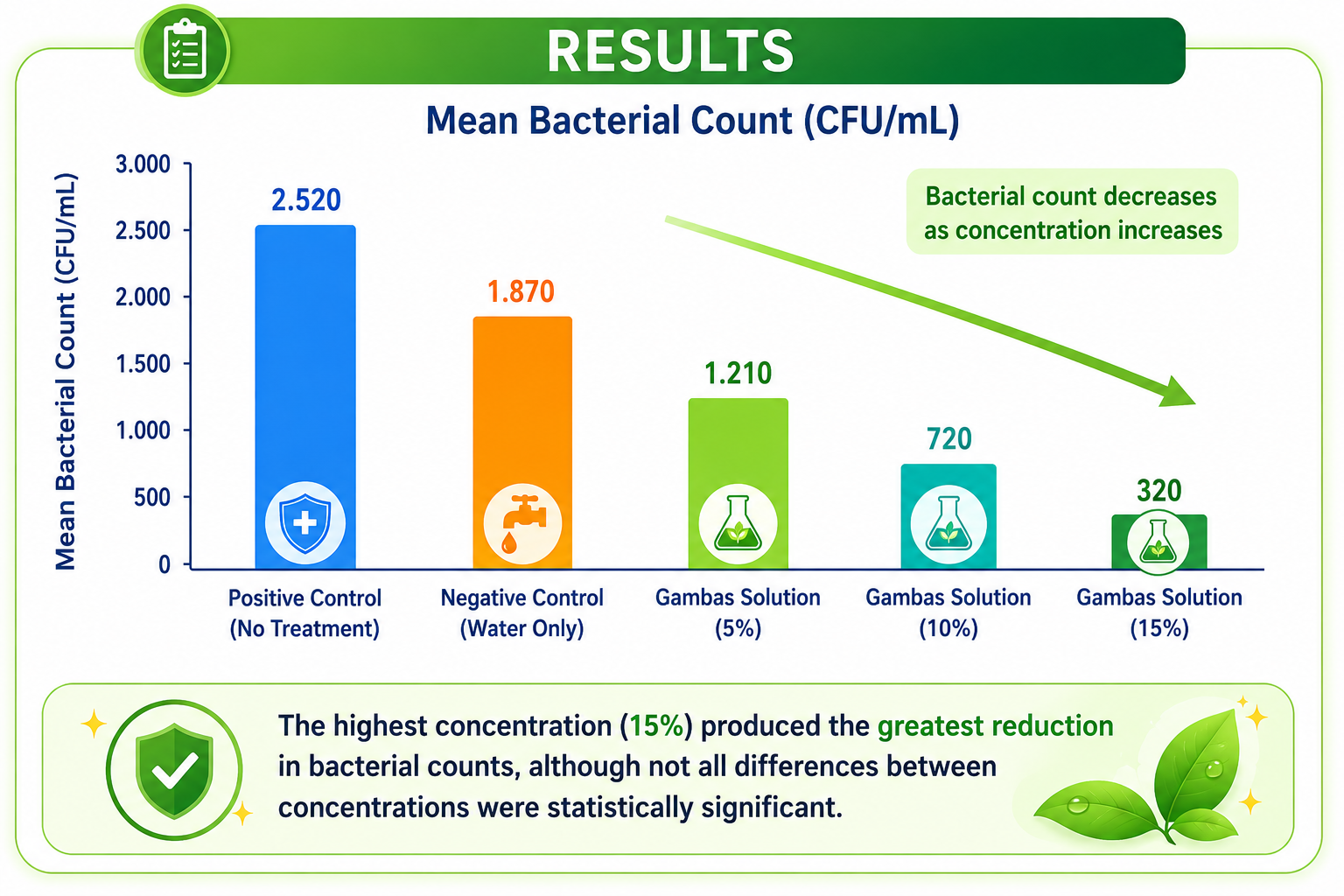
Microbiological contamination of tableware is a key aspect of food hygiene and sanitation, particularly when washing processes are unable to reduce the bacterial load sufficiently. Gambas (Luffa acutangula) contains various bioactive compounds and has been reported to exhibit antibacterial activity in laboratory tests; however, its application in reducing bacterial contamination on cutlery remains limited. This study aimed to analyse the effectiveness of various concentrations of gambas solution in reducing bacterial counts on tablespoons. The study employed an experimental design with 28 samples comprising a negative control group, a positive control group, and treatment groups using gambas solution at several concentrations. Bacterial counts on the surface of the spoons were measured after treatment and compared across groups using statistical analyses appropriate to the distribution and variance characteristics of the data. The results showed differences in bacterial counts between groups, with a tendency for bacterial counts to decrease as the concentration of the gambas solution increased. The highest concentration tested produced the greatest reduction in bacteria, although not all comparisons between concentrations showed statistically significant differences. These findings suggest that gambas solution has the potential to reduce the bacterial load on spoon surfaces under experimental conditions. However, further research is required to identify the microorganisms affected, determine the mechanism of antibacterial activity, evaluate the safety of residues, and test the consistency of efficacy under a wider range of usage conditions.
Copyright (c) 2025 Ana Alfiana, Nurul Amaliyah, Suparmin

This work is licensed under a Creative Commons Attribution 4.0 International License.